You’ve been brushing twice a day. You’re flossing. You’ve gone through a dozen different mouthwashes. And still, there’s that persistent bad breath that no mint can quite cover. If that sounds familiar, you might be fighting the wrong battle. A significant portion of chronic bad breath — the kind that keeps coming back no matter what you do to your teeth and gums — doesn’t actually originate in your mouth. It starts in the small crevices of your tonsils (the two soft tissue pads at the back of your throat), where food particles, bacteria, and dead cells clump together into tiny calcified deposits called tonsil stones (medically known as tonsilloliths). These little lumps are one of the most under-discussed causes of bad breath, and most people have never heard of them. This guide will explain what tonsil stones are, why they smell so bad, and why a water flosser — a device that shoots a thin, pressurized stream of water to clean between teeth and along the gumline — turns out to be one of the most effective tools for managing them.
What Tonsil Stones Actually Are (And Why They Smell Terrible)
Your tonsils aren’t smooth. They’re covered in small pockets and folds called crypts — essentially tiny caves in the tissue. These crypts are part of your immune system’s design; they trap pathogens trying to enter your body. The problem is they also trap food debris, mucus, and the oral bacteria that feed on it.
Over time, that trapped material gets compacted, dries out, and mineralizes (hardens, the same way a mineral deposit forms in a pipe). The result is a tonsil stone — white, yellowish, or off-white, ranging from the size of a sesame seed to occasionally a small pea. Most people who have them don’t even realize it.
Here’s where the smell comes in. According to an overview published by Healthline on tonsil stones, the bacteria that colonize tonsil crypts are predominantly anaerobic — meaning they thrive without oxygen. Anaerobic bacteria are the same class responsible for gum disease and tongue-coat odor, and they produce volatile sulfur compounds (VSCs) as a metabolic byproduct. VSCs are the chemical family that makes rotten eggs smell like rotten eggs. A peer-reviewed analysis in the Journal of Clinical Periodontology, indexed by the National Center for Biotechnology Information (NCBI), identifies VSCs as the primary driver of oral malodor (the clinical term for bad breath). When those VSC-producing bacteria set up a permanent colony inside a calcified stone lodged in your tonsil crypt, no amount of tongue-scraping or mouthwash reaches them.
WebMD’s tonsil stones overview notes that common symptoms beyond bad breath include a sensation of something stuck in the throat, mild sore throat, and occasionally visible white spots at the back of the throat — though many tonsil stones form in crypts that can’t be seen without a mirror and a flashlight.
The Mayo Clinic’s tonsilloliths entry adds that people with chronically inflamed tonsils (from recurring tonsillitis) or naturally large, crypt-heavy tonsils are most prone to developing them. But they can form in anyone with tonsils present.
Why Standard Oral Care Doesn’t Fix the Problem
This is the part that frustrates most people. Bad breath caused by tonsil stones doesn’t respond to the tools designed for teeth and gums, because the stones are physically located somewhere those tools can’t reach.
- Mouthwash (including clinical-strength formulations with CPC — cetylpyridinium chloride, an antibacterial agent — or zinc chloride) can temporarily reduce VSC levels in the mouth, but it doesn’t penetrate into tonsil crypts deeply enough to dislodge or dissolve stones. You’re neutralizing the odor molecules in the air, not the source producing them.
- Tongue scrapers are excellent for removing the bacterial biofilm on your tongue — a real and meaningful contributor to bad breath. But a tongue scraper physically cannot reach your tonsils.
- String floss targets the tight spaces between teeth, nowhere near the back of the throat.
- Probiotics (oral strains like BLIS K12, which colonize the mouth and throat to outcompete odor-causing bacteria) are genuinely promising for long-term tonsil stone prevention, and we’ll revisit that at the end. But they work over weeks and months — they don’t remove stones already present.
The American Dental Association’s halitosis overview acknowledges that while most bad breath originates from bacterial activity on the tongue and in periodontal pockets, a meaningful subset of cases involves post-nasal drip and tonsil-related causes that require different interventions. The standard dental hygiene script — brush, floss, scrape your tongue — simply wasn’t written with tonsil stones in mind.
Where the Water Flosser Comes In
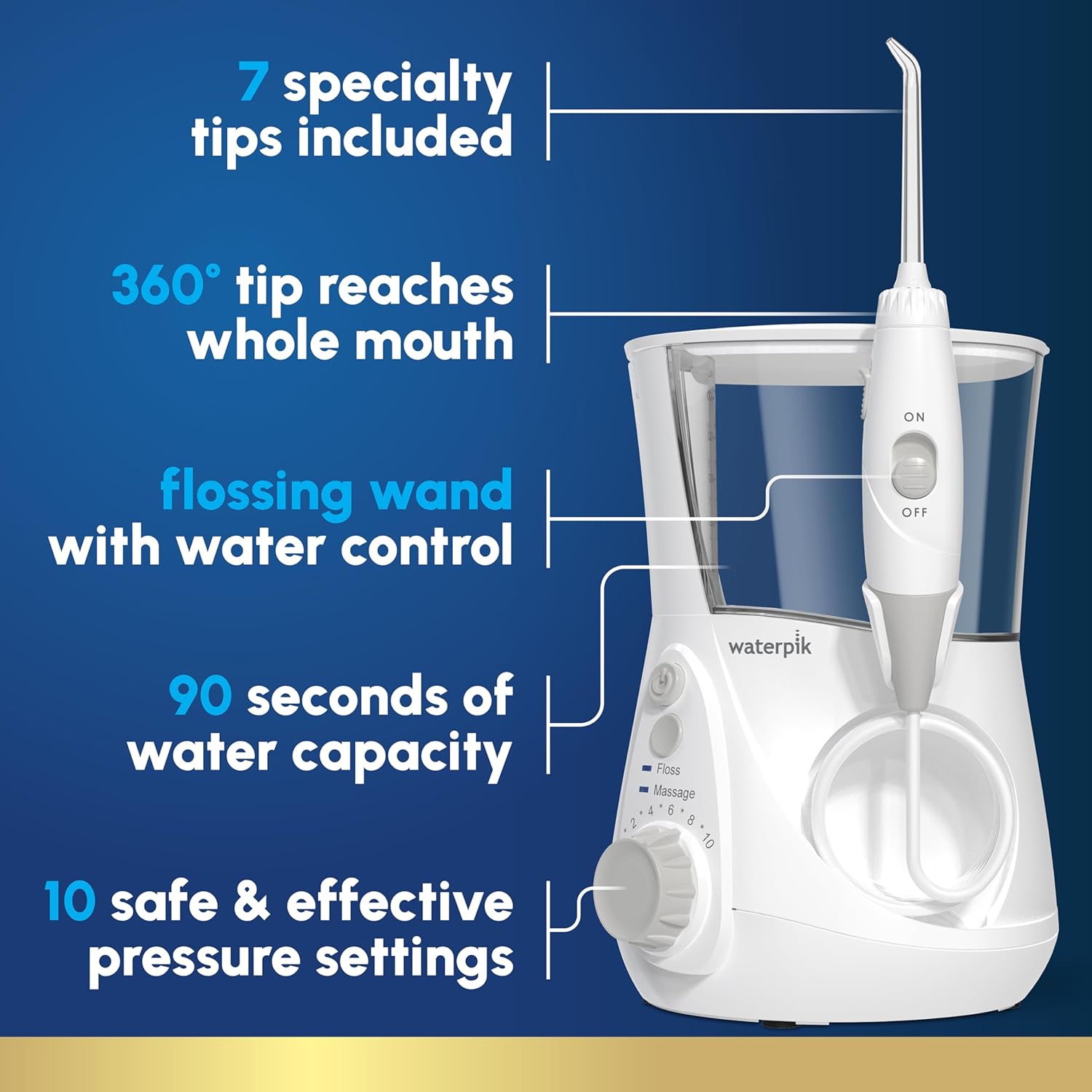
A water flosser solves the access problem. Its adjustable pressure stream can reach the back of the oral cavity, and with the right technique, it can flush the debris out of tonsil crypts before it has a chance to calcify into a stone. It can also, more carefully and at lower pressure, help dislodge stones that have already formed.
By the numbers:
- Tonsil stones affect an estimated 6–10% of adults in any given year, though many go undiagnosed (per Healthline’s tonsil stones overview).
- Water flossers occupy a range from roughly $30 for countertop entry-level units to $80–$120 for premium cordless models with pressure control — a one-time purchase versus recurring spending on mints and rinses.
- A clinical zinc mouthwash used twice daily runs approximately $0.30–$0.50 per use; a water flosser session costs fractions of a cent in water and electricity.
The technique matters as much as the device. Owners and clinicians who discuss this approach consistently recommend the following protocol:
- Set the pressure low — roughly 40–50 PSI (pounds per square inch) on devices that display pressure, or the lowest comfortable setting. High pressure aimed directly at tonsillar tissue can cause irritation or, in rare cases, push debris deeper.
- Use warm water, which tends to be more comfortable on throat tissue and may help loosen debris more effectively than cold water.
- Aim at the crypts directly — tilt your head back slightly, open wide, and direct the stream at the folds in the tonsil surface. A small mirror helps with visibility.
- Work in short bursts — 2 to 3 seconds at a time — rather than a sustained stream.
- Do this over the sink — dislodged stones or debris will need somewhere to go.
This isn’t a nightly ritual for most people; once every few days, or whenever you notice the sensation of something lodged in your throat, is how most users find it useful. Reviewers across multiple platforms who specifically mention tonsil stone management report that the water flosser is the first intervention that actually addressed the source of their chronic bad breath rather than temporarily masking it.
For those who don’t want a countertop device, cordless water flossers with a travel case are widely available in the $40–$70 range. Owners report the cordless format is especially useful for maintaining the habit while traveling, which matters because missing a few days when you’re prone to stone formation can undo progress quickly.
Choosing a Water Flosser for Tonsil Stone Management Specifically
Most water flosser buying guides are written with gum health and interdental cleaning as the primary use case. Tonsil stone management has slightly different requirements:
Pressure control is non-negotiable. You want fine-grained control to keep the stream gentle enough for throat tissue. Look for devices with at least 3 pressure settings, or — better — a continuous dial. A single-pressure device that’s optimized for gum-line cleaning may be too forceful for comfortable tonsil use.
A long, angled tip matters. Standard gum-cleaning tips are short and designed to angle between teeth. For tonsil access, a longer tip (some brands offer “tongue cleaning” or “throat” attachments) allows you to direct flow more precisely without straining your jaw or craning uncomfortably.
Tank size is less critical than for interdental use, since tonsil sessions are brief. Even a small-tank cordless unit holds enough for a 30-second tonsil flush.
Water flossers from brands like Waterpik and Panasonic dominate consumer review aggregations for reliability and pressure consistency, with Waterpik models frequently cited in dentist-recommended lists. The Wirecutter’s oral irrigator guide (published by The New York Times) focuses primarily on gum health outcomes but notes that pressure adjustability is the single most important spec for users with sensitive tissue — which applies directly to tonsil use.
The Long Game: Preventing Stones From Forming
A water flosser is a management tool, not a cure. The underlying reason tonsil stones keep forming — deep crypts, a microbiome (the community of microorganisms in your mouth and throat) loaded with anaerobic bacteria, or chronic post-nasal drip feeding the crypts with mucus — doesn’t change just because you’re flushing the debris out regularly.
For readers who want to address the root cause more deeply:
- Oral probiotics containing BLIS K12 (Streptococcus salivarius K12) are the most clinically studied strain for tonsil-region bacterial balance. This strain colonizes the throat and produces bacteriocins — natural compounds that suppress the anaerobic bacteria responsible for VSCs. A BLIS Technologies overview of the K12 strain notes it was originally isolated from the tonsils of children who were naturally resistant to strep colonization. A typical oral probiotic protocol runs 1–3 months before meaningful changes in microbial balance are observable.
- Staying hydrated keeps mucus thin and less likely to accumulate in crypts — dry mouth and thick post-nasal mucus are significant contributing factors.
- Nasal rinsing (saline nasal irrigation) reduces the volume of post-nasal drip feeding tonsil crypts. This is especially relevant for people whose tonsil stones seem to worsen during allergy season.
- Tonsillectomy remains the only permanent solution for people with severely crypt-heavy tonsils who form large or frequent stones despite consistent prevention. Most ENT (ear, nose, and throat) physicians recommend exhausting conservative options first, and water flosser use is often explicitly suggested as part of that conservative management phase.
The Decision Rule
If your bad breath has persisted despite good dental hygiene, and you’ve never specifically addressed your tonsils, the math is straightforward: a $40–$80 water flosser is the lowest-cost, lowest-risk intervention available before escalating to anything clinical. It addresses a mechanism that mouthwash, gum, and tongue scrapers genuinely cannot reach. If you add an oral probiotic protocol (K12-based, 90 days minimum) alongside it, you’re combining a removal strategy with a prevention strategy — the kind of routine stack that tends to produce lasting results rather than temporary relief.
Start with the water flosser. Give it two weeks of consistent use. If you’ve been living with tonsil stones and didn’t know it, the difference tends to be noticeable quickly. If the stones are severe, frequent, or causing throat discomfort beyond just bad breath, that’s the signal to loop in an ENT — the water flosser becomes a bridge, not the destination.