If you’ve ever stood in the dental-care aisle wondering whether a water flosser is just an expensive squirt gun — or whether the $100 countertop model does anything the $25 cordless one doesn’t — you’re not alone. A water flosser (also called an oral irrigator) is a handheld or countertop device that shoots a thin, pressurized stream of water between your teeth and along your gumline to dislodge food debris and disrupt the bacterial film called plaque. The American Dental Association notes that disrupting plaque daily — by any effective method — is central to preventing gum disease and cavities. String floss does it mechanically; a water flosser does it hydraulically. Neither is universally “better,” but for people with braces, implants, crowns, or bridges, or anyone who genuinely never manages to floss consistently, Healthline’s overview of water flossers versus string floss concludes that a water flosser used regularly beats perfect floss technique that never actually happens.
This guide maps the market into three honest price tiers, names the tradeoffs at each level, shows you the math on what you’re actually paying for, and ends with a clear decision rule so you can stop second-guessing.
The Three Price Tiers — and What the Money Actually Buys
The water flosser market in mid-2026 clusters into three bands. Wirecutter’s water flosser roundup and the Good Housekeeping Institute’s tested lineup both confirm the same basic architecture:
Tier 1 — $15–$35 (Budget Cordless) Battery-powered, reservoir holds roughly 150–200 mL (about 30–40 seconds of continuous use), typically one to three pressure settings, USB or AA-battery charging. Examples in this range include the Waterpik Cordless Express and a range of house-brand cordless units from major pharmacy chains.
Tier 2 — $40–$70 (Mid-Range Cordless or Entry Countertop) Larger reservoir (200–300 mL), more pressure settings (3–10), often includes multiple tip types (standard jet, tongue cleaner, orthodontic tip). Rechargeable. The Waterpik Cordless Advanced and Burst Oral Care’s flosser live here.
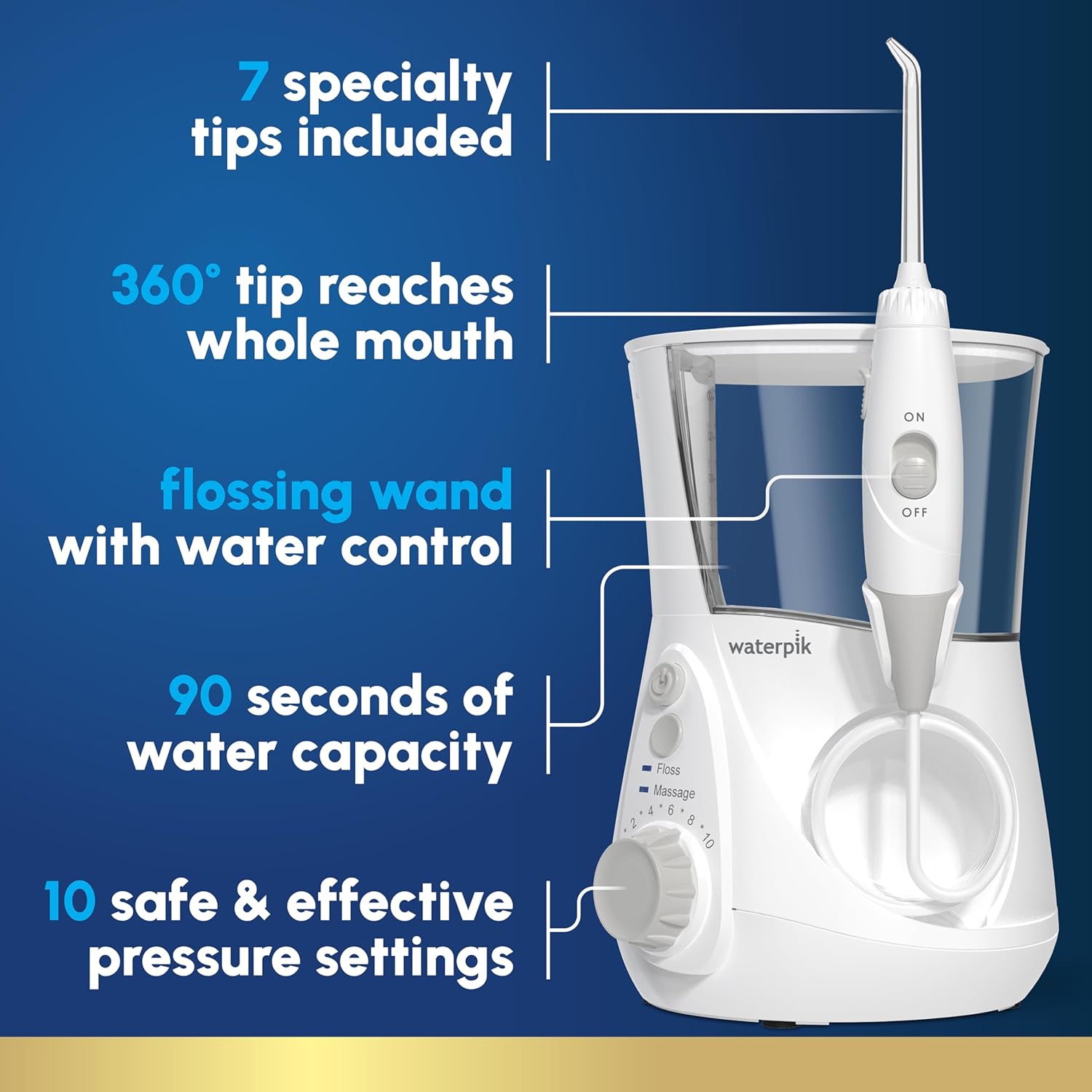
Tier 3 — $75–$130 (Countertop / Professional-Grade) Plugs into the wall, reservoir of 600–1,000 mL, 10 pressure settings, wider pressure range (10–100 PSI — pounds per square inch, the force of the water stream), multiple included tips. The Waterpik Aquarius (WP-660) is the benchmark here; it’s the model most dentists picture when they recommend a water flosser, and it’s the one with the broadest published clinical evidence behind it.
By the Numbers
| Tier | Reservoir | Max PSI | Settings | Street Price (May 2026) |
|---|---|---|---|---|
| Budget Cordless | 150–200 mL | ~45 PSI | 1–3 | $15–$35 |
| Mid-Range Cordless | 200–300 mL | ~75 PSI | 3–10 | $40–$70 |
| Countertop | 600–1,000 mL | 100 PSI | 10 | $75–$130 |
What the Specs Actually Mean for Your Mouth
Reservoir size determines how long you can irrigate without refilling. Your dentist’s guidance is usually 60 seconds of active flossing (30 seconds per side). A 150 mL reservoir at moderate pressure runs out in roughly 35–40 seconds. You’ll refill mid-session, which owners of budget models consistently cite as the main friction point in reviews. If that breaks your routine, it matters.
PSI (pressure) is where the clinical nuance lives. Mayo Clinic’s dental care overview notes that gum tissue, especially if it’s already inflamed or you’re new to water flossing, can be irritated by excessive pressure. Counterintuitively, the highest PSI setting is not where most people should start. The practical advantage of 10 settings over 3 settings is that you can genuinely begin at low pressure and build up over weeks — not just toggle between “gentle” and “aggressive.”
Tip variety matters more than most buyers expect. If you have any of the following, tip selection goes from nice-to-have to clinically relevant:
- Braces or retainers: An orthodontic tip (a thin jet with a tapered end) threads water under wires more precisely than a standard tip.
- Implants or crowns: A soft rubber “pik pocket” or periodontal tip delivers a lower-pressure stream below the gumline without abrading the crown margin.
- Back molars or crowded teeth: A tongue/plaque seeker tip angles the stream into otherwise unreachable geometry.
Budget models typically include one tip. Mid-range and countertop models typically include 3–7. Replacement tips run $10–$20 per set, so if you’re buying a budget unit and immediately ordering the tip you actually need, factor that into your price comparison.
Cord vs. cordless is mostly a lifestyle question, not a performance question. Countertop units don’t inherently clean better at equivalent pressures — they just give you more pressure range and a larger reservoir. If your bathroom has reliable counter space and an outlet near the sink, cordless convenience costs you nothing but also gains you nothing. If you travel frequently, or if your bathroom setup makes cord management annoying, cordless wins on habit-consistency — and a flosser you use daily at lower PSI beats a countertop unit you skip because setup feels like work.
The Actual Decision: Which Tier Is Right for You
Here’s the honest comparison table most buying guides skip:
Budget Cordless ($15–$35) — Buy this if: You are brand new to water flossing and want to find out if you’ll actually use one before investing more. Owners of the Waterpik Cordless Express consistently report it does the job for standard teeth without orthodontia or implants — the reservoir limitation is the only real friction. Think of it as a trial-run purchase. If you find yourself reaching for it every night, you’ll know you’ve earned the upgrade.
Mid-Range Cordless ($40–$70) — Buy this if: You’ve decided you’ll use a water flosser consistently, you have braces or moderate gum sensitivity, and you want more pressure granularity without giving up counter space. This is the tier where the value per dollar is strongest for most people. The Good Housekeeping Institute’s roundup of water flossers frequently flags mid-range cordless models as the best balance of reservoir, settings, and travel usability.
Countertop ($75–$130) — Buy this if: You have periodontal disease (gum disease that’s progressed beyond gingivitis), you’re managing implants or a fixed bridge that requires precision cleaning below the gumline, or your hygienist has explicitly recommended one. Wirecutter’s water flosser guide notes that the Waterpik Aquarius is the model with the most published clinical backing, and it’s the version dentists most commonly reference in studies on oral irrigation effectiveness. It’s also the right buy if you have multiple people in your household sharing the device, since the large reservoir and tip storage handle multi-user routines better.
What Water Flossers Don’t Do (So You’re Not Sold False Expectations)
A water flosser is a supplement to brushing, not a replacement for it — and in most published clinical guidance, it does not fully replace string floss either, particularly for tight contact points between teeth where the mechanical scraping action of floss removes plaque that water pressure alone may not dislodge. The Mayo Clinic and ADA both frame oral irrigation as a valuable adjunct, not a substitute.
The masking-versus-treating distinction matters here: rinsing with water pressure makes your gums feel clean and can meaningfully reduce gingival inflammation (the early-stage gum irritation that precedes gum disease). But if you are relying on it to replace the scraping action of floss entirely, you may be masking the problem rather than addressing it. For people who genuinely cannot use string floss — due to tight contacts, dexterity limitations, or orthodontic hardware — a water flosser is an excellent primary interdental (between-the-teeth) tool. For everyone else, it stacks best on top of flossing, not instead of it.
The One Thing to Check Before You Buy
Look at the tip compatibility before committing to a brand. Waterpik’s tips are cross-compatible across most of their product line, which means if you start with a cordless Express and upgrade to an Aquarius later, your replacement tips and specialty tips transfer. Some house-brand or off-brand units use proprietary tip connections — meaning when you need a replacement orthodontic tip or periodontal tip, you’re either locked into that brand’s ecosystem or you’re buying a new device.
Tip compatibility is the water flosser equivalent of checking ink cartridge costs before buying a printer. Owners who discover incompatibility after the fact consistently flag it as the most frustrating post-purchase surprise in long-run reviews.
The Decision Rule
If you walk away with one thing from this guide, make it this:
- No history with water flossing, standard teeth, budget under $40? Start with a budget cordless. Lose nothing if you don’t stick with it; upgrade with confidence if you do.
- Braces, implants, crowns, or gum sensitivity — any of these apply? Go mid-range at minimum for the tip variety and pressure range. The extra $20–$40 buys you tools your situation actually requires.
- Periodontal disease, multiple users, or your hygienist said “get a Waterpik”? Buy the countertop. The Aquarius-class devices are the ones the clinical literature actually studied, and the reservoir means you won’t cut the session short.
The price-per-use math almost always favors spending a tier higher than your instinct says — because a $25 device you use three times and abandon has a higher cost-per-use than a $75 device that becomes part of your nightly routine for three years. The best water flosser is the one you actually pick up.
Sources cited: American Dental Association, “Flossing,” ADA.org patient resources; Mayo Clinic, “Oral health: Brush up on dental care basics,” MayoClinic.org; Healthline, “Water Flosser vs. String Floss: Which Is Better?”; Wirecutter (New York Times), “The Best Water Flossers”; Good Housekeeping Institute, “Best Water Flossers.”