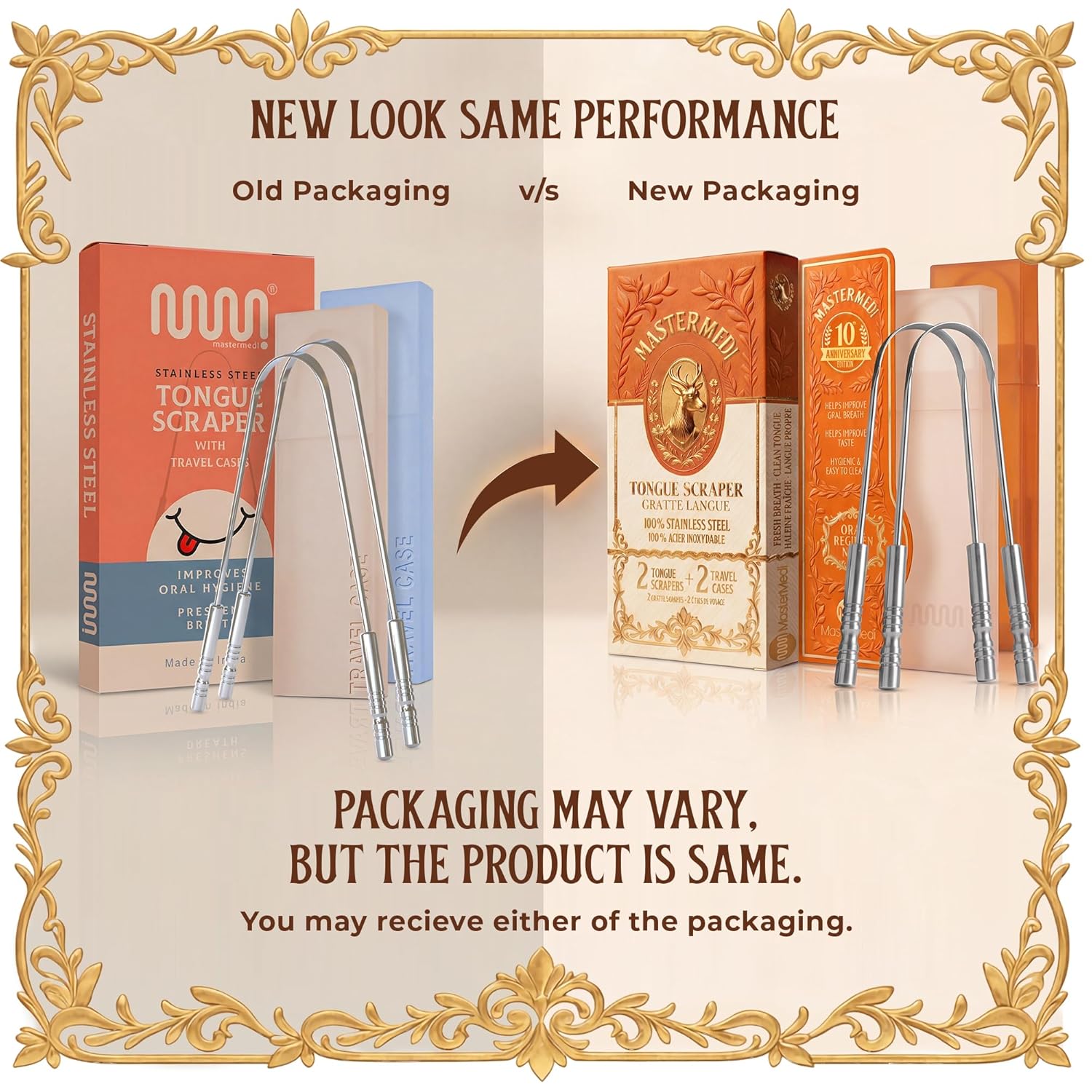
If you’ve ever brushed your teeth twice, flossed, and still felt like your breath wasn’t quite right by mid-morning, you’re not imagining things — and you’re almost certainly not alone. The problem is likely sitting on your tongue. A tongue scraper is a small, curved tool — usually a thin arc of metal or plastic — that you gently drag from the back of your tongue to the tip once or twice a day to remove the filmy coating that builds up overnight. That coating, called tongue biofilm, is a soft layer of bacteria, dead cells, food particles, and the sulfur-producing waste those bacteria excrete. It is, according to research published through the National Institutes of Health’s NCBI database, the single largest contributor to halitosis (bad breath) in otherwise healthy people. A tongue scraper doesn’t mask that smell the way a mint or an alcohol rinse does — it physically removes the source. And the most effective versions cost somewhere between $6 and $30 and last for years. This guide will help you pick the right one.
Why Your Tongue Is the Real Problem (and Why Brushing It Isn’t Enough)
Most people assume bad breath originates primarily from the gums or the spaces between teeth. The Mayo Clinic’s overview of bad breath causes notes that while gum disease and dry mouth are real contributors, the dorsal surface of the tongue — the top side, with its rough, uneven texture — is the primary habitat for the anaerobic bacteria (bacteria that thrive without oxygen) responsible for volatile sulfur compounds, or VSCs. VSCs are what you actually smell: the hydrogen sulfide and methyl mercaptan that register as that classic “morning breath” odor.
Brushing the tongue with a toothbrush does agitate some of that coating, but Healthline’s overview of tongue scraping cites clinical evidence that scraping is measurably more effective at reducing VSC-producing bacteria than brushing the tongue alone. The mechanism is mechanical: a rigid edge compresses and lifts the biofilm off the tongue’s surface in a way that bristles — designed to scrub enamel, not soft tissue — simply can’t replicate.
The practical upshot: if you’re currently skipping tongue care entirely, adding even a $6 plastic scraper to your routine will likely produce a noticeable difference within a week. If you’re already scraping with a plastic tool and want to upgrade, the material and shape of your scraper genuinely matter.
The Material Decision: Stainless Steel vs. Copper vs. Plastic
This is where most buyers stall. Here’s how the three materials actually compare.
Plastic
Plastic scrapers — often bundled with electric toothbrushes or sold in multi-packs for under $5 — are the logical starting point. They work. The edges are softer than metal, which some people prefer if their gag reflex is sensitive. The downsides are durability (plastic warps and harbors surface micro-scratches over time, which become bacterial reservoirs) and environmental waste. Most dental hygienists recommend replacing plastic scrapers every three to four months, which means the low sticker price erodes over a multi-year horizon.
Stainless Steel
Stainless steel is the workhorse choice. It’s non-porous, so it doesn’t absorb bacteria the way scratched plastic can. It rinses clean under the tap in seconds. A well-made stainless scraper — brands like Dr. Tung’s are frequently cited in Wirecutter’s tongue scraper coverage and across aggregated retailer reviews — can last a decade or more with zero degradation. Owners of stainless models consistently report that the tool feels sturdier in hand and maintains its edge geometry over years of use. The price range is roughly $7–$15 for a quality single unit.
Copper
Copper occupies the premium end of the category and carries a genuine functional argument beyond aesthetics. Copper is oligodynamic — meaning it has a natural, low-level antimicrobial effect on contact. Mindbodygreen’s feature on copper versus stainless tongue scrapers notes that dentists who practice within Ayurvedic-informed oral care routinely recommend copper for this property, pointing to copper’s established role in reducing microbial load on contact surfaces. Whether the antimicrobial effect is clinically significant for a tool used for roughly ten seconds and then rinsed is a legitimate open question — researchers haven’t closed that debate yet. What isn’t debated: copper scrapers from brands like Dr. Tung’s and Bodewell are built to the same durable, non-porous standard as stainless, and owners consistently report that the tools develop a natural patina over time (which is normal oxidation and doesn’t reduce efficacy).
Copper scrapers typically run $12–$22 for a single unit. At current 2026 pricing, a Dr. Tung’s copper scraper sits at roughly $10–$14 depending on the retailer and whether it’s purchased in a multi-pack.
By the numbers
| Material | Typical price (single unit) | Replacement cadence | Antimicrobial property |
|---|---|---|---|
| Plastic | $4–$7 | Every 3–4 months | None |
| Stainless steel | $7–$15 | Years (indefinite) | None |
| Copper | $12–$22 | Years (indefinite) | Mild, contact-based |
Shape and Design: The Details That Actually Affect Daily Use
Material gets most of the attention, but the geometry of a scraper determines whether it actually fits your mouth — and whether you’ll keep using it.
Arc width. Most adult tongue scrapers measure 1.5 to 2 inches across. A wider arc covers more surface area per pass, meaning you can clear the full tongue in two passes rather than four. Narrower scrapers can be useful for people with a strong gag reflex because they require less tongue depression, but they sacrifice efficiency.
Handle design. There are two dominant designs: the U-shaped loop (a single arc of metal with two grip ends that your fingers spread slightly) and the flat-handled paddle style. The U-loop design is more common in metal scrapers and is generally preferred by reviewers for its simple one-piece durability — there are no joints or seams to trap debris. Paddle designs are more common in plastic and offer a more toothbrush-like feel for people making the transition from tongue-brushing.
Edge finish. This is the detail most buyers overlook entirely until they’ve already purchased. A scraper edge that is too sharp will nick soft tissue; an edge that is too rounded won’t create the mechanical lift needed to remove biofilm efficiently. The best metal scrapers use a smooth, slightly beveled edge — reviewers across multiple platforms describe Dr. Tung’s stainless and copper models as having a well-calibrated edge that feels firm without being aggressive. When evaluating any scraper, the edge should feel similar to the edge of a credit card: defined, but not sharp.
How to Use a Tongue Scraper Correctly (Most People Rush This)
Owning the right tool only matters if the technique is solid. The steps are genuinely simple, but there are two common errors worth naming.
-
Extend your tongue fully. The back third of the tongue is where biofilm is densest and where VSC-producing bacteria concentrate most heavily. Most people start too far forward. Position the scraper as far back as is comfortable — you’ll hit the gag reflex threshold quickly, and you don’t need to go past it.
-
Use light, consistent pressure. The biofilm is soft. You don’t need to press hard — a firm but gentle drag from back to front is all the edge needs. Pressing harder doesn’t remove more coating; it just irritates the tissue.
-
Rinse the scraper between passes. Each forward pass deposits a visible film on the scraper edge. Rinse under running water before the next pass or you’re simply redistributing the same material.
-
Three to five passes is typically sufficient. If you’re still pulling visible residue off after five passes, that’s a signal to scrape more frequently (twice daily instead of once) or to look at dietary contributors — dairy and high-protein foods accelerate biofilm accumulation.
-
Time it right. The highest biofilm load is present first thing in the morning, before eating or drinking anything. Scraping before breakfast and before any oral hygiene products gives you the cleanest baseline read on what you’re removing.
If X, Then Y: A Clear Decision Rule
This is where the research resolves into a practical purchase framework.
If you’ve never scraped before and want to start with minimal commitment: A stainless steel U-loop scraper in the $8–$12 range is your move. It will outlast any plastic option, clean easily, and give you an honest baseline for whether daily scraping changes your breath experience. Dr. Tung’s stainless model is the most consistently cited entry point across Wirecutter’s coverage and aggregated buyer reviews — it’s a reasonable first purchase.
If you’re already scraping with plastic and want a genuine upgrade: Move to copper. The antimicrobial argument may still be evolving in the literature, but the durability and non-porous surface are functionally identical to stainless, and the material has a longer track record in Ayurvedic oral care traditions. Brands like Dr. Tung’s and Bodewell are the names that appear most reliably in this tier’s reviews. Expect to spend $12–$20 and not replace it for years.
If you’re building a full breath-care protocol — stacking scraping with an oral probiotic, a zinc-based rinse, or Cocofloss for interdental cleaning — the scraper choice matters less than the habit consistency. Any quality metal scraper used daily will outperform the best plastic scraper used occasionally. Buy once at a reasonable price point and spend your optimization energy on the rest of the stack.
If you have a sensitive gag reflex: Start with a narrower plastic scraper for the first two weeks to train the reflex, then transition to metal. The reflex adapts quickly for most people once the motion becomes routine.
The bottom line is honest and a little anticlimactic: tongue scraping is the most cost-effective halitosis intervention available without a prescription, and it’s genuinely underused. The research referenced through NCBI, the Mayo Clinic’s guidance on breath hygiene, and the aggregated experience of buyers across review platforms all point in the same direction — the tool works, the cost is negligible, and the only reason more people don’t do it is that nobody told them to start.
Now you know. Pick a metal one, use it every morning, and give it two weeks.