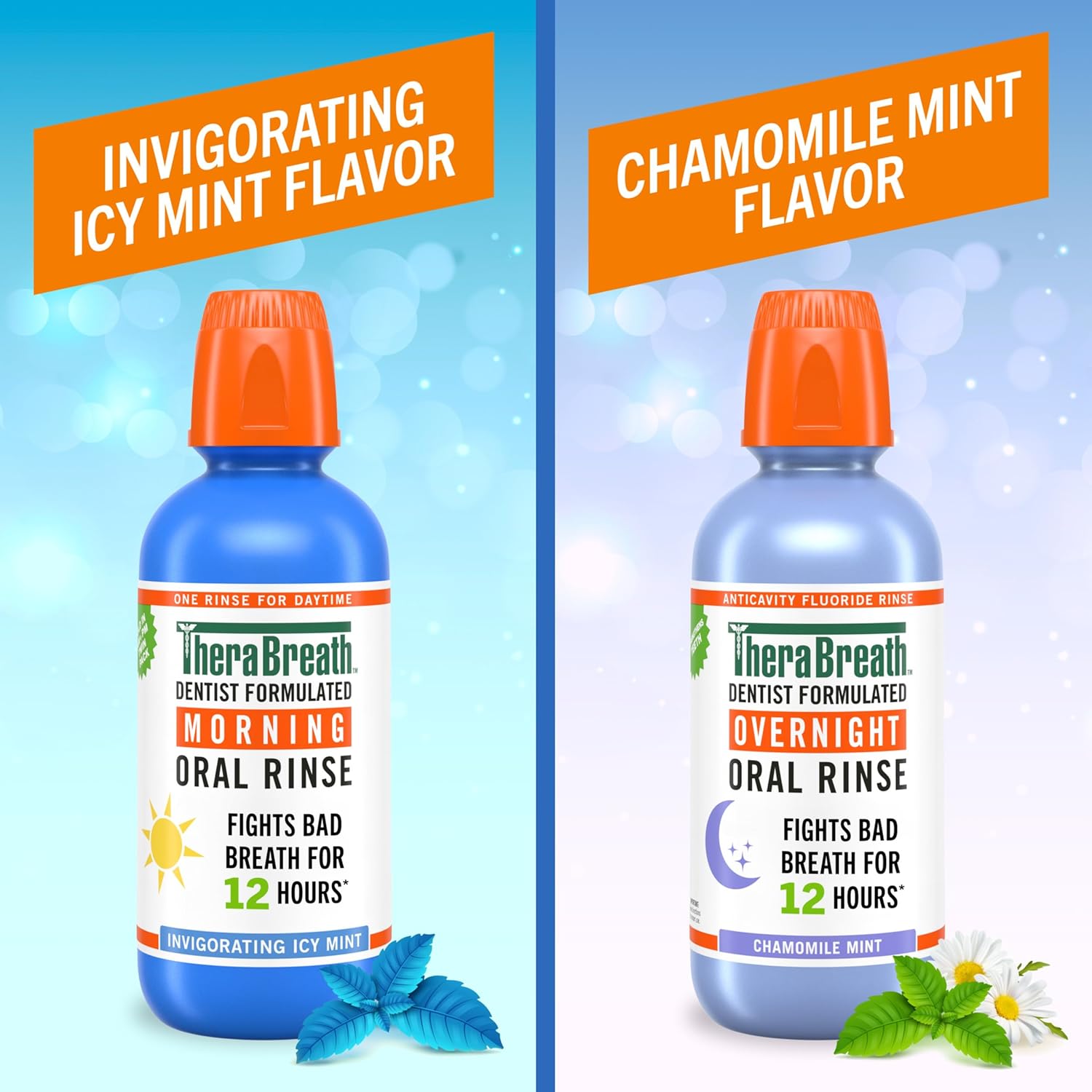
If you’ve ever stood in a drugstore aisle staring at the TheraBreath section and thought, okay, but which one do I actually buy — this is for you. TheraBreath is a clinical oral-care brand built around one core idea: bad breath isn’t a hygiene failure, it’s a chemistry problem. The culprits are VSCs — volatile sulfur compounds — which are smelly gases produced when bacteria in your mouth break down proteins. Most mints and alcohol-based rinses just cover those gases up for twenty minutes. TheraBreath’s approach is to neutralize them chemically, primarily using OXYD-8 (a stabilized form of chlorine dioxide, an antimicrobial compound) and zinc, which binds to sulfur molecules and essentially deactivates them. The brand makes toothpaste, mouthwash, lozenges, mouth-wetting tablets, and more. The question this article answers is: how do you stack these products so each one is doing a real job, in the right order, without waste?
The short answer is that sequence and timing matter more than most people expect. Let’s walk through it.
Why Stacking Order Matters (This Isn’t Just Marketing)
Here’s the thing about oral-care products that the back of the package doesn’t explain: some ingredients interfere with each other if you use them out of order, and some products set the stage for the next one to work better.
A few concrete examples:
-
Toothpaste first, then rinse — always. Toothpaste (especially fluoride toothpaste) leaves a residue on your enamel. If you rinse with mouthwash before brushing, you’re washing away active ingredients before they’ve done anything. Per the American Dental Association’s guidance on mouthwash, the most effective sequencing for therapeutic rinses is brushing first, then rinsing — not the reverse.
-
Don’t rinse with water after mouthwash. This is the single most common mistake. TheraBreath’s active compounds — OXYD-8 and zinc — need dwell time on the soft tissues of your mouth (cheeks, back of tongue, gumline) to neutralize VSCs. Rinsing with water immediately after mouthwash dilutes those compounds before they finish working.
-
Tongue cleaning before brushing, not after. Your tongue is estimated to harbor up to 80% of the odor-causing bacteria in your mouth, per Healthline’s overview of bad breath causes. Scraping loose bacteria before you brush means your toothpaste and rinse aren’t fighting through a thick biofilm — you’ve already disrupted it.
Get the order wrong and you’re getting maybe 40–50% of the benefit you paid for. Get it right and the products compound each other.
The Core Stack: Three Products, Two Sessions
You don’t need every TheraBreath SKU to build an effective routine. The baseline stack that most reviewers and oral-health sources point to as the starting framework is:
- TheraBreath Fresh Breath Toothpaste (available in Original or Mild Mint — the Mild Mint is notably lower in flavor intensity, which some users prefer for sensitivity reasons)
- TheraBreath Fresh Breath Oral Rinse (the 16 oz or 32 oz bottles — the 32 oz is meaningfully better value on a per-use basis, see the numbers block below)
- TheraBreath Fresh Breath Lozenges (for mid-day maintenance, between brushing sessions)
Morning Routine (10–12 minutes total)
Step 1 — Tongue scrape (60 seconds). Use a tongue scraper — metal is preferred over plastic because it removes more biofilm per pass and doesn’t flex away from the tongue surface. Scrape from back to front, rinse the scraper, repeat 3–5 times. You’re not brushing the tongue here; you’re physically removing the soft bacterial layer before anything else.
Step 2 — Brush with TheraBreath toothpaste (2 minutes). Two minutes, full coverage. The OXYD-8 in the toothpaste starts breaking down sulfur compounds on contact. Don’t rush this step — the dwell time is doing work.
Step 3 — Rinse with TheraBreath Oral Rinse (1 minute). Pour about 1 tablespoon (the standard dose), swish actively for a full 60 seconds. Get it between your teeth, under your tongue, and against the back of your throat. Spit. Do not rinse with water. Do not eat or drink for at least 5 minutes if you can manage it — the compounds are still active on your mucosal tissue.
That’s your morning stack. The whole thing takes under 15 minutes including the tongue scrape.
Evening Routine (add one step)
Everything above, but add flossing between the tongue scrape and brushing. Evening is when the heaviest bacterial load accumulates — you’ve been eating all day and saliva flow decreases as you approach sleep. Saliva is your mouth’s natural flushing mechanism, so nighttime is when bacteria get their best growing conditions. Mayo Clinic’s explainer on bad breath explicitly identifies reduced saliva flow during sleep as a primary driver of morning breath. Flossing before brushing means the loosened debris gets swept up by the toothpaste rather than sitting in the gumline overnight.
Where the Premium Add-Ons Actually Pay Off
If the core three-product stack is your foundation, here’s where the additional TheraBreath products fit — and honest notes on which ones earn their place.
TheraBreath Dry Mouth Lozenges vs. Fresh Breath Lozenges — Know the Difference
TheraBreath makes two distinct lozenge products and they solve different problems.
- Fresh Breath Lozenges contain zinc and OXYD-8 — they’re actively neutralizing VSCs. These are the ones to reach for when you need mid-day coverage between brushing sessions.
- Dry Mouth Lozenges are formulated with xylitol (a sugar alcohol that stimulates saliva production without feeding bacteria) and don’t contain the same VSC-neutralizing compounds. They’re for people whose primary issue is dry mouth — a condition where saliva production is low, which in turn accelerates bacterial growth.
If you’re buying lozenges and you’re not sure which you need: if your breath gets noticeably worse in the afternoon despite brushing in the morning, and you’re a mouth-breather or take any medications that cause dry mouth, start with the Dry Mouth formulation. If your dry mouth isn’t the issue and you just want VSC suppression, the Fresh Breath lozenges are your call. Per WebMD’s coverage of zinc for bad breath, zinc acetate specifically has strong evidence for binding to sulfur compounds — the ingredient worth checking for on the label.
TheraBreath Whitening Rinse — Worth Adding?
The Whitening Oral Rinse adds hydrogen peroxide to the OXYD-8 base. Hydrogen peroxide does whiten over time, but it also introduces a tradeoff: it can be mildly irritating to soft tissue with daily long-term use, particularly for anyone with canker sores or mouth sensitivity. Across aggregated reviews, users who rotate it in 3–4 times per week rather than using it as a daily replacement for the standard rinse report better outcomes — meaningful whitening without the irritation buildup.
The decision frame: If whitening is a goal and your mouth tolerates peroxide well, rotating the Whitening Rinse into your PM routine 3–4x weekly is a sensible add. If you have any sensitivity issues or recurring sores, stay on the standard rinse daily.
By the Numbers
| Product | Size | Approx. Cost (2026) | Cost Per Use |
|---|---|---|---|
| TheraBreath Oral Rinse | 16 oz (≈32 uses) | ~$10–$12 | ~$0.34–$0.38 |
| TheraBreath Oral Rinse | 32 oz (≈64 uses) | ~$16–$19 | ~$0.25–$0.30 |
| TheraBreath Toothpaste | 4 oz tube (≈30–35 uses) | ~$9–$11 | ~$0.26–$0.37 |
| Fresh Breath Lozenges | 24-count | ~$8–$10 | ~$0.33–$0.42 each |
The 32 oz rinse is consistently the better value — roughly 20–25% cheaper per use than the 16 oz, and it runs out at roughly the same time as two tubes of toothpaste, making repurchase timing easier to manage.
The One Mistake That Wipes Out Your Results
Let’s be direct about this: alcohol-based mouthwashes actively work against the TheraBreath system. If you’re using a conventional alcohol rinse (Listerine Original, most store-brand antiseptic rinses) in the same routine, the alcohol dries out your oral tissues. Dry tissues produce less saliva. Less saliva means more bacterial growth and more VSC production — which is the exact problem you’re trying to solve. Per NCBI research on volatile sulfur compounds and periodontal conditions, salivary flow is one of the primary mechanical defenses against anaerobic bacteria (bacteria that thrive without oxygen and produce the worst-smelling VSCs).
TheraBreath’s entire line is alcohol-free by design. If you’re going to build this stack, replace any alcohol rinse you’re currently using. That’s not a brand-loyalty play — it’s just the chemistry being consistent with itself.
If X, Then Y: The Decision Rules
Here’s the clean framework for where to start and how to scale:
-
If you’re new to TheraBreath and want the highest-impact entry point: Start with the toothpaste + 32 oz rinse combination only. Two products, twice daily, correct sequence. Evaluate after 2 weeks before adding anything.
-
If morning breath is your primary complaint: Add tongue scraping before the toothpaste step. This alone often makes a larger difference than adding a second rinse.
-
If afternoon breath is your primary complaint: Add Fresh Breath Lozenges for mid-day use. One lozenge after lunch is the highest-leverage time.
-
If dry mouth is part of your picture (morning cottonmouth, mouth-breathing, medications): Swap the standard lozenges for the Dry Mouth formulation and consider whether an oral moisturizing gel at night fits your needs.
-
If whitening matters and you tolerate peroxide: Rotate the Whitening Rinse into your PM routine 3–4x weekly, not daily.
-
If you’re not getting results after 3 weeks on the core stack: Check sequencing first (tongue scrape → floss → brush → rinse, no water after). Sequence failure explains more disappointing results than product quality.
The full stack doesn’t require buying everything at once. Build the foundation, let it run for a few weeks, then add where you have a specific gap. That approach also makes it easier to know which product is doing what — which, if you’re the kind of person who reads ingredient labels, is probably exactly how you want to do it anyway.