If you’ve worked through every minty mouthwash on the shelf and your breath still resets to “problem” within a couple of hours, you’re not imagining it — and you’re not failing at basic hygiene. Chronic bad breath (the clinical term is halitosis) is mostly a microbiology problem: certain bacteria that live in your mouth produce smelly sulfur compounds as a natural byproduct of their metabolism. Most mouthwashes kill those bacteria temporarily, but they don’t change which bacteria dominate your mouth long-term. Oral probiotics — lozenges or tablets containing beneficial live bacteria — take the opposite approach: they try to crowd out the odor-causing strains and rebalance your mouth’s bacterial community (called the oral microbiome) over weeks of daily use. This article breaks down how each approach works, where each one wins, and — most importantly — which one makes sense for your specific situation and budget.
| EDITOR'S PICK[BioGaia Prodentis 3-Pack](https://www.amazon.com/dp/B009O4GD86?tag=greenflower20-20) | Mid-tier[SmartMouth Original Zinc Activa…](https://www.amazon.com/dp/B00J7G0K9O?tag=greenflower20-20) | Budget pick[Atlantis Nutrition Oral Probiot…](https://www.amazon.com/dp/B0DGNJ627D?tag=greenflower20-20) | |
|---|---|---|---|
| Form factor | Lozenge | Mouthwash | Chewable tablet |
| Mechanism | Probiotic | Zinc-activated | Probiotic |
| CFU count | — | — | 3 billion |
| Flavor | Mint | Fresh mint | Strawberry |
| Alcohol-free | — | ✓ | — |
| Pack size | 3-pack | 16 fl oz | — |
| Price | $57.00 | $19.68 | $14.97 |
| See on Amazon → | See on Amazon → | See on Amazon → |
What Mouthwash Actually Does (and Where It Stops)
Mouthwash is genuinely useful. According to the American Dental Association’s patient resource on mouthrinses (ada.org), antiseptic rinses containing active ingredients like cetylpyridinium chloride (CPC — a bacteria-killing compound) or chlorhexidine can meaningfully reduce bacterial load in your mouth for a window of several hours. Fluoride rinses strengthen enamel. Certain formulas reduce early-stage gum inflammation.
The honest limitation: mouthwash is a reduction strategy, not a replacement strategy. It clears the field temporarily, but it doesn’t install new tenants. Once you stop rinsing, the same bacteria repopulate from the surfaces mouthwash couldn’t fully reach — your tongue’s deep grooves, the crevices between teeth, and the back of your throat. According to Mayo Clinic’s patient resource on bad breath (mayoclinic.org), the most common origin points for halitosis are exactly those hard-to-reach zones, which helps explain why even diligent twice-daily rinsers can still experience persistent odor.
The alcohol question deserves its own paragraph. Many conventional mouthwashes use alcohol as their antimicrobial carrier. Alcohol does kill bacteria, but it also dries out oral tissues — and a dry mouth produces less saliva. Saliva is your mouth’s natural antibacterial flush system. Less saliva means more bacterial growth and, in turn, more odor. Healthline’s overview article “What Are Oral Probiotics and Do They Work?” notes that dry mouth (xerostomia) is itself a leading driver of halitosis, which means high-alcohol rinses can create a partial feedback loop for some users. Alcohol-free formulas avoid this problem while still delivering active ingredients.
Budget Mouthwash: Alcohol-Based Antiseptic Rinse
Standard alcohol-based antiseptic rinses — the category that includes most drugstore brands — deliver a 2–4 hour active window at a monthly cost of roughly $5–$10. They reduce bacterial load acutely but do not address the root-cause question of which bacteria repopulate afterward. Best suited for situational, occasional use rather than chronic halitosis management.
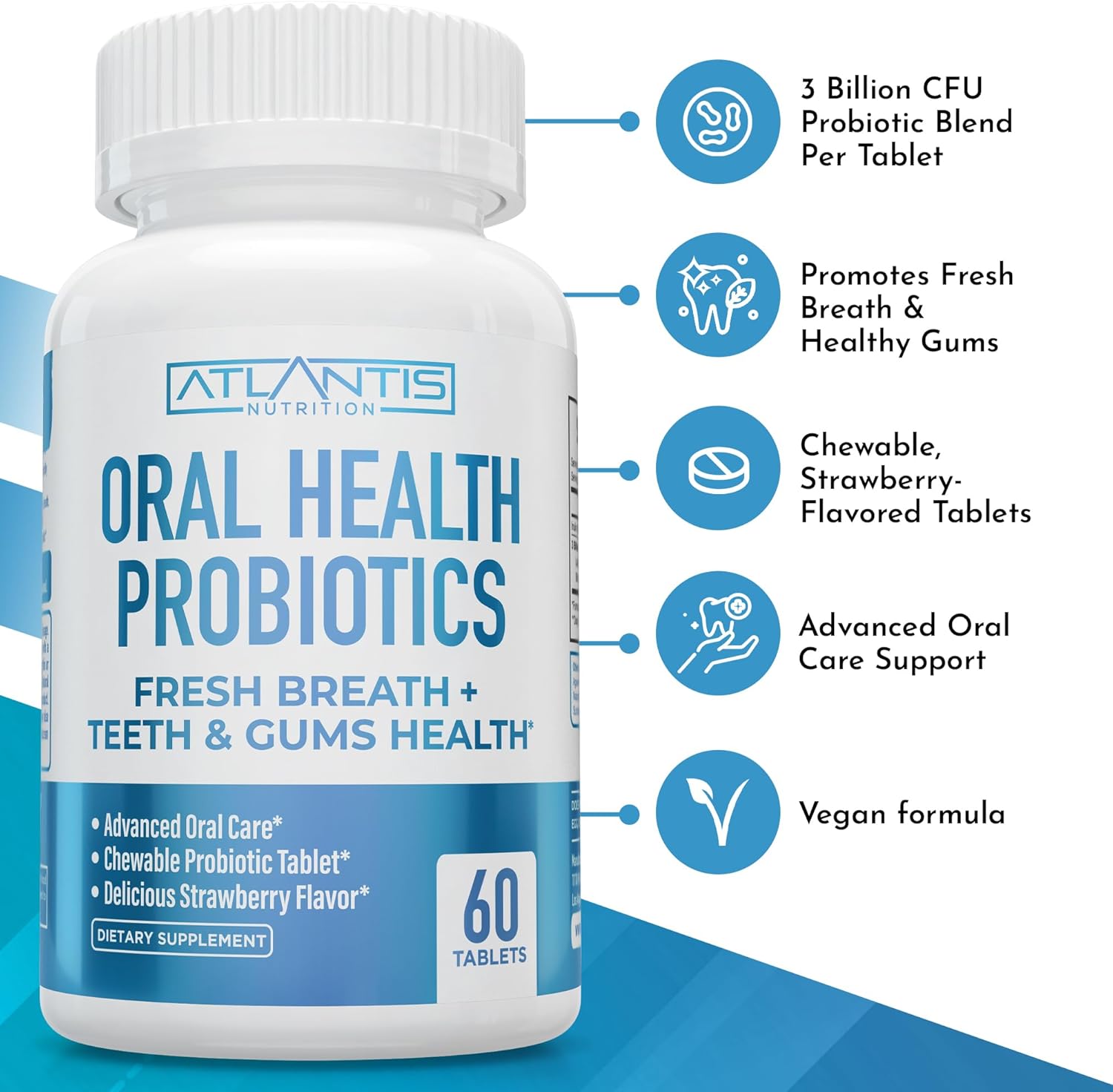
Atlantis
$14.97
In stock on Amazon
Check price on AmazonMid-Tier Mouthwash: Alcohol-Free Clinical Rinse
Alcohol-free clinical rinses — such as the TheraBreath Clinical Strength line or ACT Anticavity — extend the effective window to roughly 4–6 hours and avoid the dry-mouth feedback loop associated with alcohol-based formulas. Monthly cost runs $10–$18. The American Dental Association’s mouthrinse resource notes that alcohol-free formulas with proven active ingredients remain a valid antiseptic option for patients concerned about dry-mouth effects. Still a masking strategy, not a root-cause fix, but a meaningfully better daily-use choice.
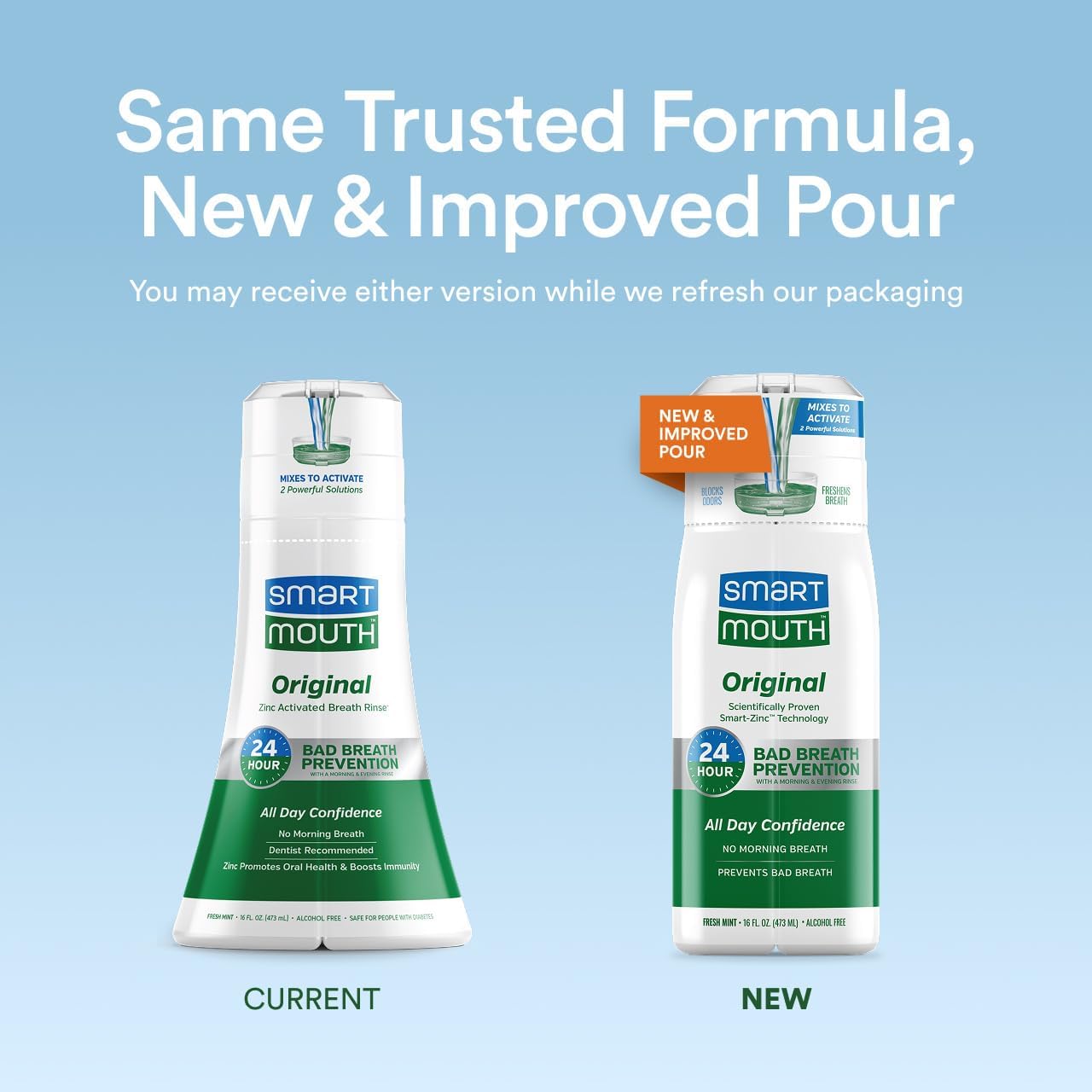
SmartMouth
$19.68
In stock on Amazon
Check price on AmazonPremium Approach: Oral Probiotic Protocol
Oral probiotic lozenges built around clinically validated strains represent the highest-cost entry in this comparison at $25–$50 per month, but they address a fundamentally different goal: shifting which bacteria dominate your oral microbiome over time. The active window is cumulative — measurable changes in bacterial composition typically appear after 4–8 weeks of daily use. This is the appropriate tier for chronic, persistent halitosis that survives brushing and standard rinsing.
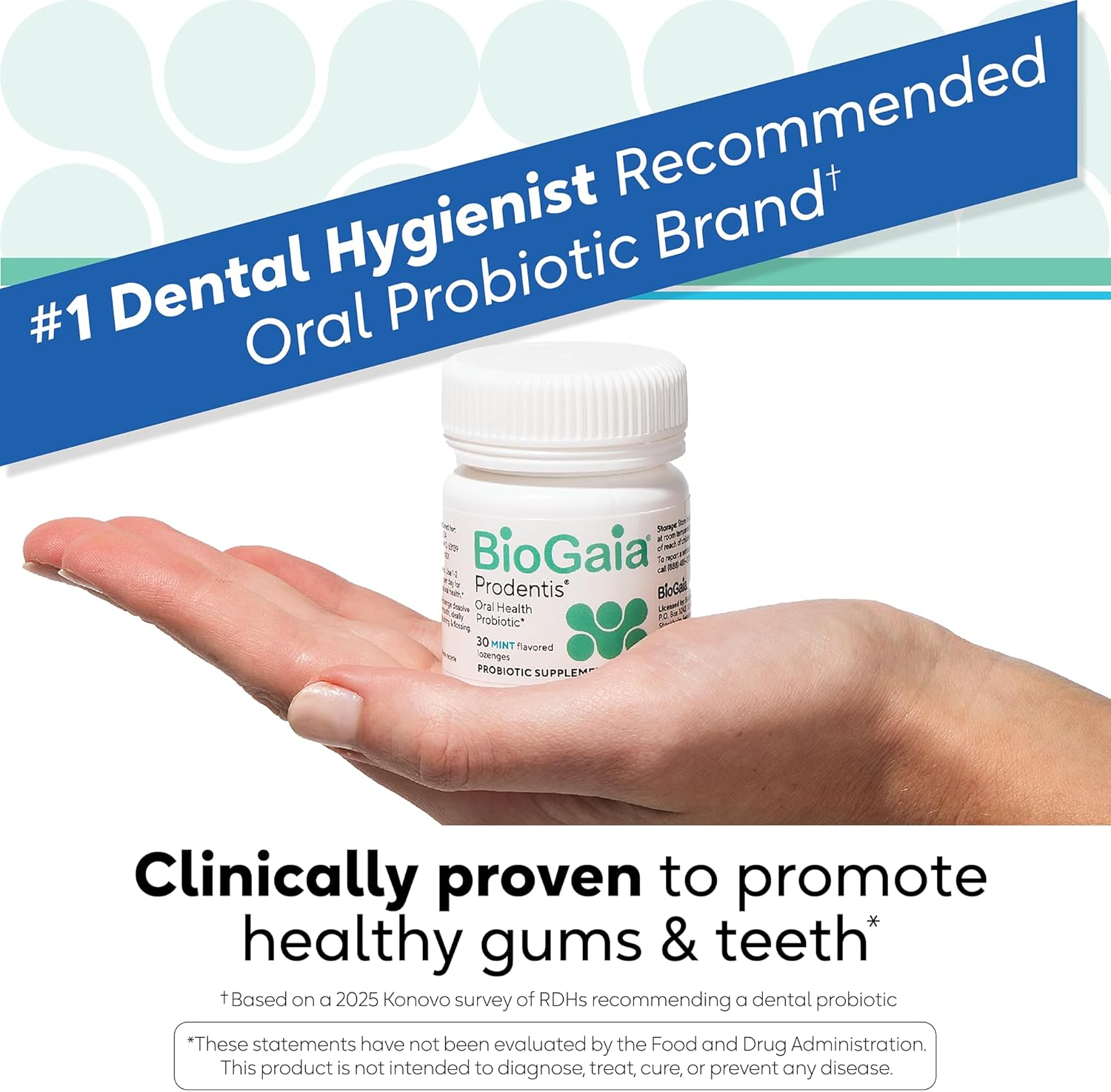
BioGaia
$57.00
In stock on Amazon
Check price on AmazonWhat Oral Probiotics Are Actually Trying to Do
Probiotics in the gut context are reasonably well-known. Oral probiotics work on the same principle but for a different ecosystem. The idea is competitive exclusion: you regularly introduce beneficial bacterial strains that compete for the same attachment sites and food sources that odor-causing bacteria need. Over time, the goal is a measurable shift in which strains dominate your oral microbiome.
The two strains with the strongest published evidence base for oral use are Streptococcus salivarius K12 and Streptococcus salivarius M18. Examine.com’s compound summaries for these strains document multiple randomized controlled trials — studies where one group receives the active product, another receives a placebo, and neither group knows which — showing statistically significant reductions in halitosis scores and volatile sulfur compound (VSC) levels. VSCs are the specific category of molecule responsible for the sulfur or “rotten egg” smell associated with chronic bad breath. The National Institutes of Health’s National Library of Medicine (ncbi.nlm.nih.gov) indexes peer-reviewed clinical research on S. salivarius K12 in the PubMed database, including trials examining its effects on oral bacterial composition.
Lactobacillus reuteri is a secondary strain worth knowing. Examine.com’s compound summary for L. reuteri notes evidence supporting its role in gum health and reducing periodontal bacteria specifically, which matters because gum disease is one of the root causes of chronic halitosis that mouthwash reliably cannot fix on its own.
The important caveat: oral probiotics are not fast. Most published protocols run 4–8 weeks before measurable changes in oral bacterial composition occur. Users who try a product for five days and declare it ineffective are running the experiment on the wrong timeline. This is a long-game intervention, not a before-dinner breath fix.
The Real Decision Framework: Masking vs. Fixing
Here’s the honest comparison your money deserves.
Mouthwash is the right tool when:
- The issue is situational — post-meal odor from garlic or onion that is not chronic
- You need a quick-window solution for a specific event
- You are using it alongside a root-cause intervention, not instead of one
- You have active gum disease — the American Dental Association’s clinical guidance notes that dentist-prescribed chlorhexidine rinses are often part of an active periodontal treatment plan
Oral probiotics are the right tool when:
- Odor is consistent and chronic, present even after brushing
- You have ruled out obvious mechanical causes — gum disease, cavities, post-nasal drip — with a dental visit first
- You are willing to commit to a 6–8 week daily protocol
- You understand that probiotics work on bacterial composition, not on structural problems like a cracked tooth or infected tonsils
The honest case for using both: This is what most serious oral-care practitioners end up recommending. The logic is straightforward: an alcohol-free rinse clears the field acutely while the probiotic protocol works to change which bacteria repopulate that field over time. Healthline’s overview of oral probiotics describes this complementary approach as one supported by several researchers in the field, while noting that additional large-scale trials are still needed to fully characterize long-term outcomes.
The stack that appears most consistently in ingredient-literate oral-care contexts: an alcohol-free zinc-based rinse used morning and evening (zinc ions directly inhibit VSC production at the chemistry level, not just through bacterial kill), paired with a daily S. salivarius K12 lozenge used at a separate time — ideally at night after brushing, when saliva flow is lowest and bacteria have the longest uninterrupted window to colonize oral surfaces. Timing the lozenge away from the rinse prevents the rinse from washing out the probiotic bacteria before they can adhere.
CFU Count, Protocol Length, and the Label Math
When shopping oral probiotics, the label will show a CFU count (colony-forming units — a measure of how many live bacteria are present in the dose). In gut-probiotic marketing, higher CFU is often positioned as better. For oral probiotics, the research picture is more nuanced.
Examine.com’s compound summaries and multiple studies indexed in the NIH’s PubMed database indicate that strain identity matters more than CFU count for oral applications. A product with 1 billion CFU of a clinically validated strain such as S. salivarius K12 is likely more effective than 10 billion CFU of a strain with no oral-specific trial data. When reading labels, prioritize:
- Strain specificity — Does the label name the exact strain (e.g., “S. salivarius K12”) or only the genus and species? Strain-level disclosure is the quality signal that indicates the manufacturer is working from the clinical literature.
- Delivery format — Lozenges that dissolve slowly in the mouth deliver bacteria directly to oral tissues. Swallowed capsules largely bypass the mouth and are better suited for gut applications.
- Timing guidance — Most clinical protocols use the lozenge at bedtime after brushing. Products that follow this protocol in their usage directions are more likely to have been designed around the actual research.
- Protocol length commitment — If a product’s packaging implies you will notice results in 3–5 days, treat that as a yellow flag. Packaging that honestly references 4–8 week windows is consistent with the clinical literature.
Price-per-use reality check: A 30-count lozenge supply at $25–$35 works out to roughly $0.85–$1.15 per day. Against a $12 bottle of clinical mouthwash used twice daily over 30 days, the probiotic costs more upfront but addresses a different and deeper problem. The relevant comparison is not price-per-bottle; it is price-per-outcome.
If X, Then Y: Your Decision Rule
If your bad breath is occasional and situation-driven → buy a quality alcohol-free rinse and use it consistently. You do not need a probiotic protocol. Alcohol-free clinical rinses in the mid-tier category have solid track records for acute situational use.
If your bad breath is chronic, consistent, and survives brushing → rule out structural causes with a dentist first, then run a full 8-week oral probiotic protocol. Products built around S. salivarius K12 are the most evidence-aligned options currently on the market based on the research indexed in PubMed and summarized by Examine.com.
If you have already done both and have not seen improvement → the source may not be oral at all. Mayo Clinic’s halitosis patient resource specifically notes that gastroesophageal conditions such as acid reflux, post-nasal drip, and certain systemic conditions can produce breath odor that originates below the oral cavity entirely. A medical evaluation — not more oral products — is the right next step in that scenario.
If you want the complete approach and have the budget for it → stack an alcohol-free zinc rinse used morning and evening with a nightly K12 lozenge protocol, add a daily tongue scrape with a metal scraper, and run the full regimen for 8–12 weeks before evaluating results. This is the most comprehensive non-prescription approach consistent with current evidence.
The bottom line: mouthwash is a good tool used incorrectly when it becomes the only tool for a chronic problem. Oral probiotics are a genuine root-cause intervention, but they require patience and strain specificity to work. Knowing which problem you actually have is the decision that makes every dollar you spend more effective.